How to Cycle a New Aquarium: Complete Step-by-Step Guide
Cycling is the most important process when setting up a new aquarium. Learn how to do it correctly to ensure your fish stay healthy.
What is aquarium cycling?
Aquarium cycling, also known as the nitrogen cycle or biological cycle, is the process by which a colony of beneficial bacteria is established in the filter and substrate of the aquarium. These bacteria are essential for converting the toxic waste from fish (ammonia) into less harmful compounds (nitrites and finally nitrates).
Without an established biological cycle, the ammonia produced by fish would quickly build up in the water, causing stress, disease and even death. Cycling is therefore the foundation of a healthy, stable aquarium.
Important: Cycling is a biological process that cannot be safely sped up artificially. It requires patience and time, usually between 4 and 8 weeks.
Why cycling is important
When you add fish to a new aquarium, they start producing waste immediately. This waste contains ammonia, a highly toxic substance even at very low concentrations (0.25 ppm can be lethal to many fish).
In a cycled aquarium, the following happens:
- Nitrosomonas bacteria: Convert ammonia (NH₃) into nitrites (NO₂⁻)
- Nitrobacter bacteria: Convert nitrites into nitrates (NO₃⁻)
- Nitrates: Are much less toxic and can be removed through regular water changes
Without these bacteria, ammonia builds up quickly, causing new tank syndrome, which can be fatal to fish.
Cycling methods
Traditional method (with hardy fish)
This method uses hardy fish as "cycling fish" to start the cycle. Although it is the oldest method, it is not recommended by most modern aquarists due to the stress and risk it poses to the fish.
Warning: This method can cause stress and illness to the cycling fish. It should only be used if you have no other option and with extremely hardy fish such as danios or guppies.
If you decide to use this method, you will need to do very frequent water changes (daily or every two days) to keep ammonia under control until the cycle is established.
Fishless method (recommended)
This is the most ethical and recommended method. It involves fully cycling the aquarium before adding any fish. Although it requires more patience, it is much safer and more humane.
Advantages of the fishless method:
- Does not expose fish to toxic conditions
- Allows you to add all fish at once when finished
- Results in a more stable cycle
- Is the method preferred by experienced aquarists
This method uses an ammonia source (such as pure ammonia or fish food) to feed the bacteria during the cycling process.
Quick method with bacteria
This method combines fishless cycling with commercial products that contain beneficial bacteria cultures. Although it can speed up the process, it does not guarantee a complete cycle and should always be verified with water tests.
Products such as Seachem Stability, API Quick Start or Tetra SafeStart can help, but should not be considered a magic solution. The biological cycle still needs time to become fully established.
Step-by-step fishless cycling
Step 1: Set up the aquarium completely
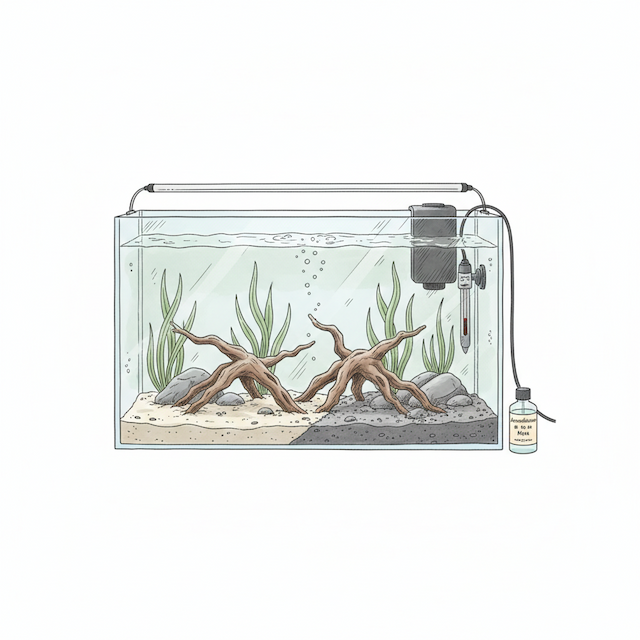
Before you start cycling, make sure your aquarium is fully set up:
- Substrate in place and rinsed
- Decorations and plants (if you use them) installed
- Filter set up and running
- Heater installed and set to the desired temperature (24-26°C for most tropical fish)
- Lighting configured
- Water treated with conditioner to remove chlorine and chloramines
Step 2: Add an ammonia source
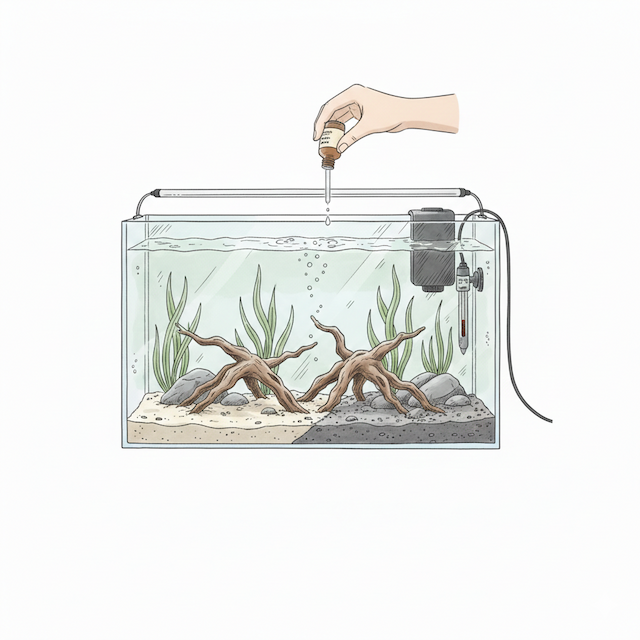
You need an ammonia source to feed the bacteria. You have two main options:
Option A: Pure ammonia (recommended)
Use pure ammonia with no additives (you can find it in hardware stores). Add enough to reach 2-4 ppm ammonia. Generally, this means adding 2-4 drops per 10 litres of water.
Important: Make sure the ammonia does not contain detergents, perfumes or other additives. It must be 100% pure ammonia.
Option B: Fish food
Add a small amount of fish food to the aquarium each day. It will decompose and produce ammonia. This method is less precise but more accessible.
Step 3: Monitor the cycle daily
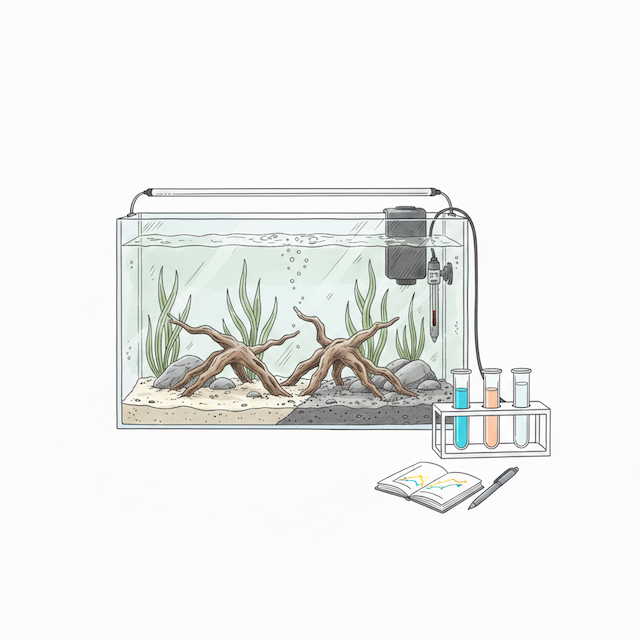
During cycling, you will need to do daily water tests to track progress. Use a liquid test kit (such as API Master Test Kit) that includes tests for:
- Ammonia (NH₃): Should rise initially and then drop to 0
- Nitrites (NO₂⁻): Will appear after ammonia, rise and then drop to 0
- Nitrates (NO₃⁻): Will appear at the end and may accumulate
Keep a daily record of these values to see the progress of the cycle.
Step 4: Maintain ammonia
During the first few weeks, Nitrosomonas bacteria will begin to develop. You need to keep the ammonia level between 2-4 ppm by adding more ammonia when it drops. This feeds the bacteria and allows them to multiply.
When you see ammonia drop to 0 within 24 hours of adding it, the first phase of the cycle is complete.
Step 5: Appearance of nitrites
Once ammonia starts to convert, you will see nitrites appear and rise. This is normal and expected. Nitrites are also toxic, but Nitrobacter bacteria will begin to develop to convert them into nitrates.
Continue adding ammonia as needed to keep the cycle active.
Step 6: Complete conversion
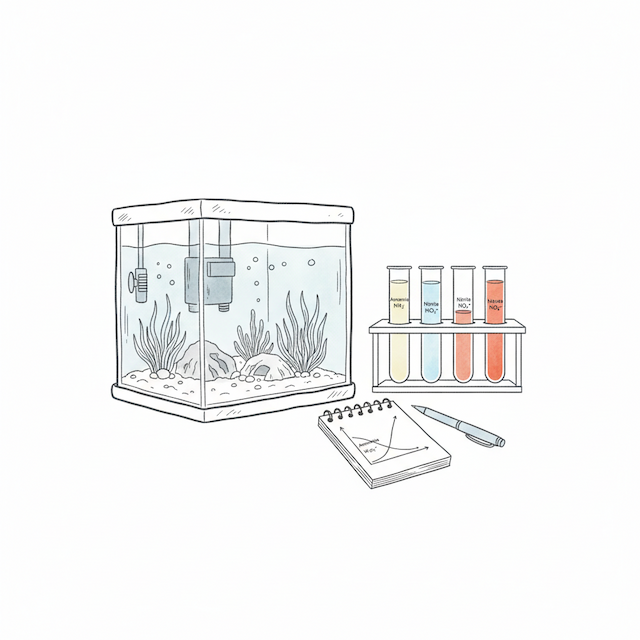
The cycle is complete when you can add ammonia and within 24 hours:
- Ammonia: 0 ppm
- Nitrites: 0 ppm
- Nitrates: Present (this is normal)
This means the bacteria can process the ammonia completely in one day, which is roughly what your fish will produce.
Step 7: Final water change
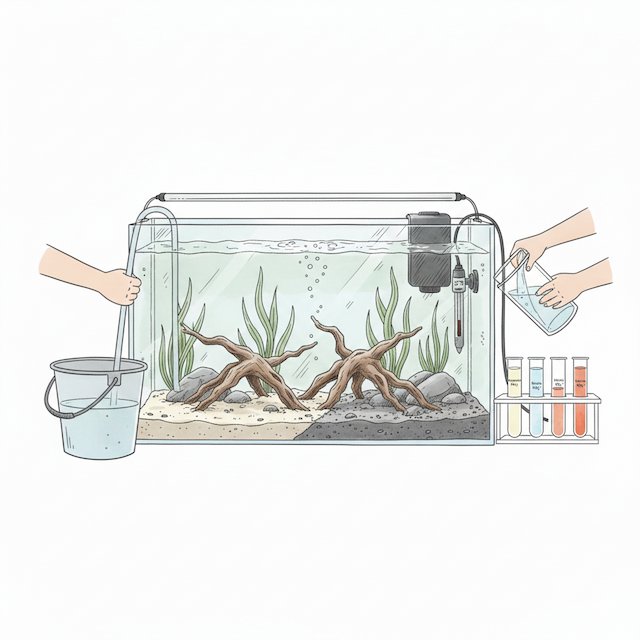
Before adding fish, do a 50-70% water change to reduce accumulated nitrates. This prepares the aquarium to receive fish with ideal parameters.
After the water change, verify again that ammonia and nitrites are at 0 before adding fish.
How to know when cycling is complete
Cycling is complete when your aquarium can fully process ammonia within 24 hours. To verify:
Cycle verification test
- Add ammonia until you reach 2-4 ppm
- Wait 24 hours
- Do a water test
- If ammonia = 0 ppm and nitrites = 0 ppm, the cycle is complete
- If either is above 0, continue cycling
Typical time: Complete cycling usually takes between 4 and 8 weeks, although it can vary depending on water temperature, pH, and whether you use bacteria products.
Common mistakes during cycling
1. Adding fish too soon
The most common mistake is adding fish before the cycle is complete. This causes stress, disease and death. Always verify the cycle is complete before adding fish.
2. Cleaning the filter during cycling
Beneficial bacteria live mainly in the filter. Cleaning the filter with tap water (which contains chlorine) or replacing the filter media can kill the bacteria and restart the cycle.
3. Excessive water changes
During cycling, water changes should be minimal (only if ammonia exceeds 5 ppm). Frequent water changes remove the ammonia that bacteria need to develop.
4. Not maintaining ammonia
If you do not add ammonia regularly during cycling, the bacteria will have no food and the cycle will stop. Make sure to maintain 2-4 ppm ammonia levels.
5. Using untreated water
Chlorine and chloramines in tap water kill beneficial bacteria. Always use a water conditioner to remove these chemicals before adding water to the aquarium.
Frequently asked questions about cycling
How long does cycling take?
Usually between 4 and 8 weeks, although it can vary. Factors such as temperature (cycles faster at 26-28°C), pH (optimal between 7.0-8.0), and use of bacteria products can affect the time.
Can I speed up cycling?
You can use beneficial bacteria products and keep the temperature between 26-28°C, but the biological process still needs time. There is no way to fully cycle an aquarium in less than 2-3 weeks safely.
What if the cycle stalls?
If ammonia and nitrites do not change for several days, check that you are adding enough ammonia, that the temperature is adequate, and that there is no chlorine in the water. It may be necessary to restart the process.
Can I use plants during cycling?
Yes, plants can help absorb ammonia and nitrates. However, some plants can be sensitive to high ammonia levels during cycling. Hardy plants such as Anubias, Java Fern or Java moss are good options.
Conclusion
Cycling is the most important process when setting up a new aquarium. Although it requires patience, it is essential for the health and wellbeing of your fish. The fishless method is the most ethical and recommended, and although it takes longer, it results in a more stable and healthy aquarium.
Remember: a well-cycled aquarium is the foundation of a thriving aquatic ecosystem. Take the time you need and do not rush to add fish. Patience during cycling translates into years of enjoyment with a healthy aquarium.
Was this guide helpful?
Join FishFlow and share your experiences with the aquarist community. Learn from others, share your knowledge and find everything you need for your aquarium.