Essential Equipment for Your First Aquarium: Complete Guide
Setting up your first aquarium requires the right equipment. Find out what you really need and what you can skip when starting out.
Essential equipment (mandatory)
These items are absolutely necessary to maintain a healthy aquarium. Do not skimp on these components, as they are the foundation of a successful aquarium.
1. Aquarium
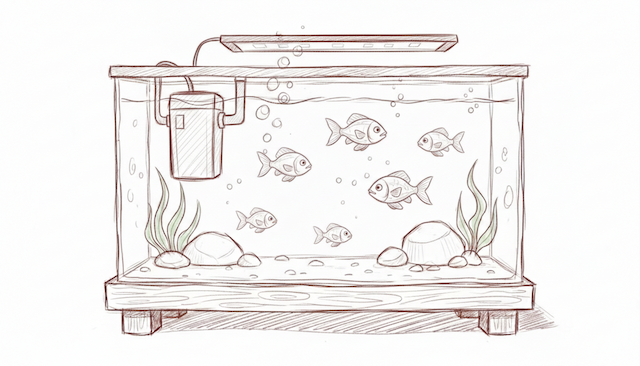
The aquarium is the heart of your setup. For beginners, we recommend at least 40-60 litres. Larger aquariums are more stable and more forgiving of mistakes.
- Minimum recommended size: 40-60 litres for beginners
- Material: Glass or acrylic (glass is more scratch-resistant)
- Shape: Rectangular is better than round (more water surface for oxygen)
- Includes: Lid to reduce evaporation and prevent fish from jumping out
Tip: Larger aquariums are easier to maintain than small ones. An 80-100 litre aquarium is ideal for beginners.
2. Filter
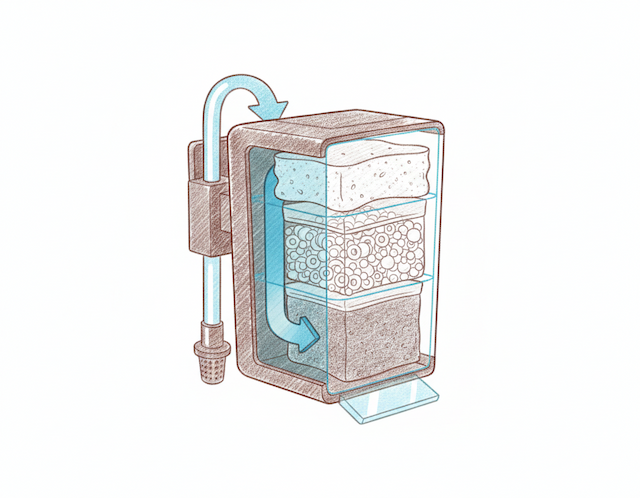
The filter is the most important filtration system. It keeps the water clean and hosts the beneficial bacteria of the nitrogen cycle.
- Types: Internal filter, external (canister) filter, or hang-on-back (HOB) filter
- Capacity: Should filter 4-6 times the aquarium volume per hour
- For 60 litres: Filter rated 240-360 litres/hour
- Components: Mechanical (sponge), biological (ceramic/bio-media), and chemical (activated carbon, optional) filtration
Recommendation: For beginners, an internal or hang-on-back filter is easier to install and maintain. External filters are more powerful but more complex.
3. Heater
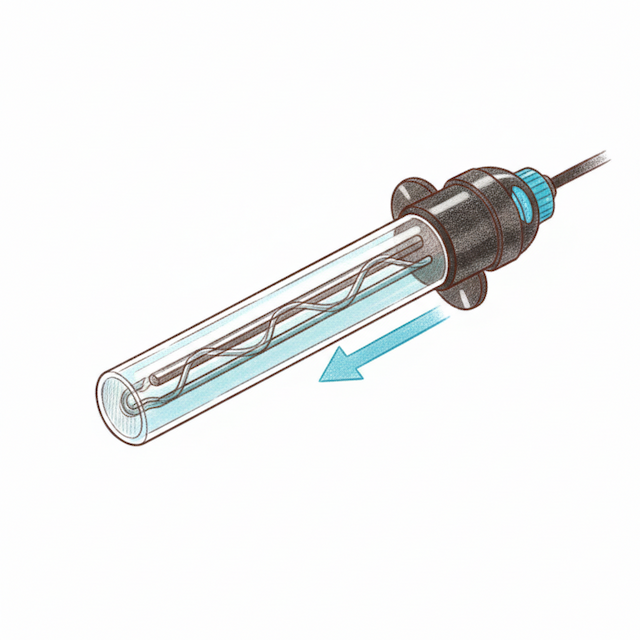
Most tropical fish need a constant temperature between 24-26°C. A heater with a thermostat is essential.
- Power: Generally 1W per litre of water (60 litres = 60W minimum, 75-100W is better)
- Type: Submersible heater with adjustable thermostat
- Location: Near the filter for better heat circulation
- Safety: Make sure it is fully submerged before switching it on
Warning: Never turn on a heater when it is out of the water. It can break and be dangerous.
4. Lighting
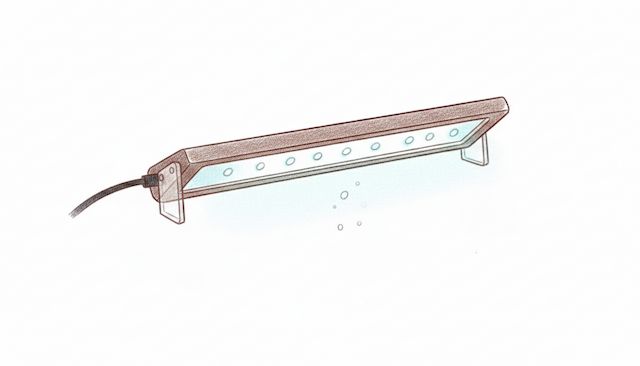
Lighting is needed for plants and to observe your fish. For basic aquariums, LED lighting is the best option.
- Type: LED is more efficient and lasts longer than fluorescent lights
- Intensity: For easy plants, basic lighting is sufficient
- Duration: 8-10 hours per day (use a timer)
- Included: Many aquariums come with basic lighting included
Tip: An automatic timer is very useful for maintaining a consistent light cycle.
5. Water Test Kit
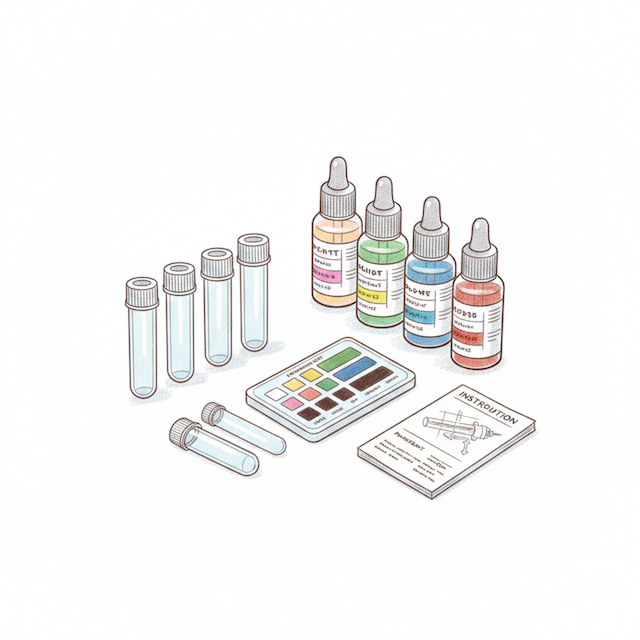
Essential for monitoring water quality and detecting problems before they affect the fish.
- Recommended: Test kit (ammonia, nitrites, nitrates, pH)
- Alternative: Test strips (less accurate but quicker)
- Frequency: Weekly during cycling, then every 1-2 weeks
- Additional: GH and KH tests are useful but not essential at first
Important: You cannot maintain a healthy aquarium without regularly measuring water parameters.
6. Water Conditioner
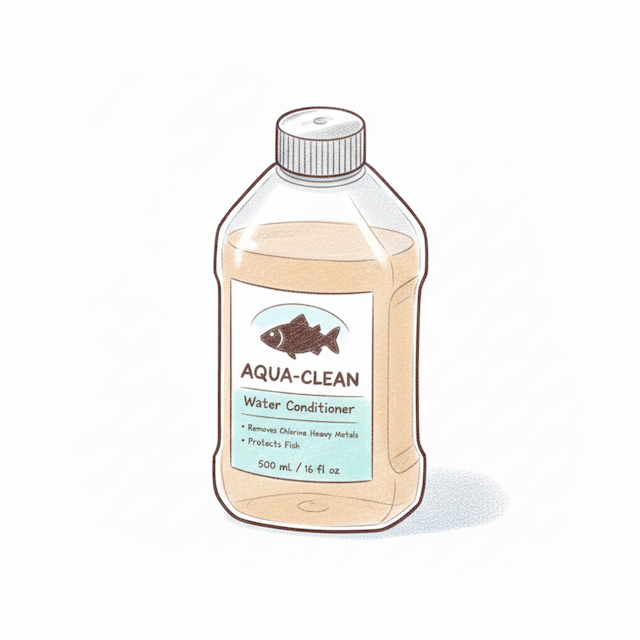
Tap water contains chlorine and chloramines that are toxic to fish and kill beneficial bacteria.
- Function: Removes chlorine, chloramines and heavy metals
- Use: Add before every water change
- Popular brands: Seachem Prime, API Stress Coat, Tetra AquaSafe
- Amount: Follow product instructions (usually 1-2 ml per 10 litres)
Critical: Never add tap water directly to the aquarium without conditioner.
7. Water Change Siphon
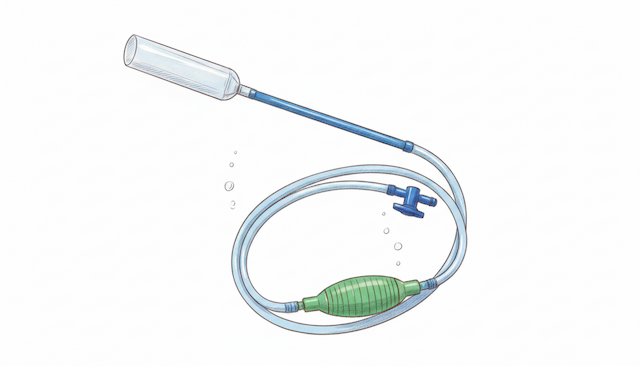
Needed for regular water changes and cleaning the substrate.
- Type: Gravity siphon (with hose) or manual siphon
- Function: Sucks debris from the substrate and allows water changes
- Size: Appropriate for the size of your aquarium
You can use a simple hose, but a purpose-made siphon is more convenient.
8. Thermometer
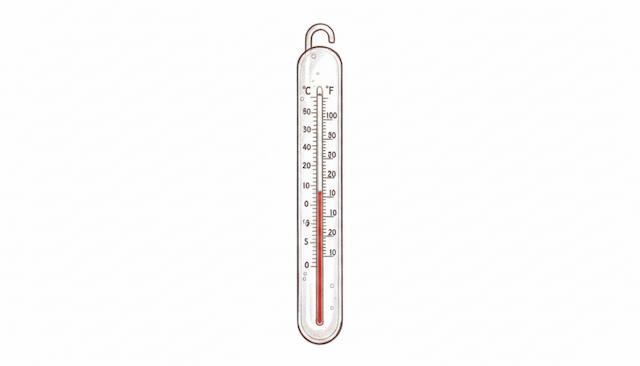
Essential to check that the water temperature is correct.
- Type: Glass, digital or adhesive thermometer
- Location: Side of the aquarium, away from the heater
- Verification: Regularly check that the heater is working correctly
Useful equipment (recommended but not essential)
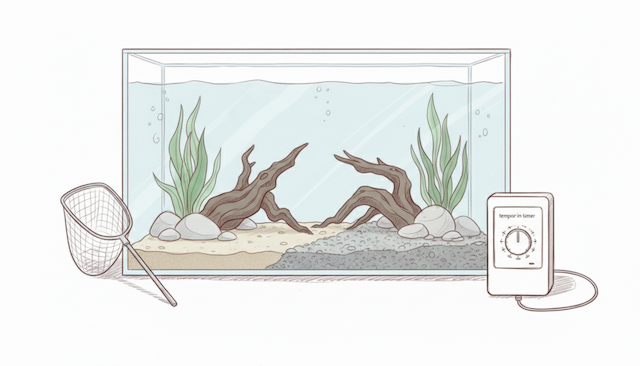
Substrate
Gravel or sand for the bottom. Not strictly necessary, but improves aesthetics and provides surface for beneficial bacteria.
Decorations
Rocks, wood, real plants (artificial not recommended). They provide shelter and improve aesthetics.
Fish Net
Useful for moving fish or removing debris. Do not use nets with very small fish (they can get trapped).
Timer
Automates turning the lights on and off, keeping a consistent cycle.
Optional equipment (for later)
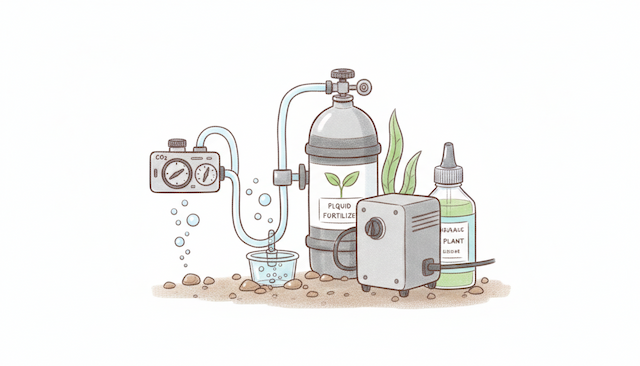
CO2 System
Only needed for advanced planted aquariums. Not necessary for beginners.
Air Pump
Useful to increase oxygen, but usually not necessary if the filter provides enough water movement.
Plant Fertilisers
Useful if you have plants, but easy plants can grow without extra fertiliser.
Estimated budget
For a basic 60 litre aquarium with all essential equipment:
- Aquarium with lid: €80-150
- Filter: €30-80
- Heater: €20-40
- Lighting: €30-100 (may be included)
- Test kit: €20-40
- Water conditioner: €5-15
- Siphon: €10-20
- Thermometer: €5-15
- Substrate and decoration: €30-80
- Approximate total: €230-540
Fish and plants add €50-150 extra. It is better to invest in quality equipment than to buy the cheapest, as cheap equipment can fail or be inadequate.
Conclusion
Essential equipment is the foundation of a successful aquarium. Do not skimp on the filter, heater and water tests – these are the most important components.
Start with the essential equipment and add extra items as you gain experience. A well-equipped aquarium from the start will save you problems and money in the long run.
Was this guide helpful?
Join FishFlow and share your experiences with the aquarist community. Learn from others, share your knowledge and find everything you need for your aquarium.